Why getting clear on who owns what is the fastest path to gaining traction?
In growing businesses, ‘accountability’ is an often-used buzzword. It’s talked about in meetings, written into job descriptions, and dropped into strategy slides. The truth though is this. Accountability is either real, or it’s not. When it is real, it’s a superpower.
The difference between a high-performing team and one that’s just getting by often comes down to a simple but powerful question.
“Do we all know who owns what… and what success actually looks like?”
Let’s be honest. In most small to mid-sized professional firms, roles are blurry. People wear multiple hats, accountability is shared (which often means no one truly owns it), and important things fall through the cracks, unless the owner or the vital (and long-suffering) few get it done.

Symptoms of fuzzy accountability can manifest in the following ways:
- Projects stall or loop indefinitely
- Meetings feel circular
- Plenty of “I thought you were doing that?” moments
- High performers get overloaded while others stay unclear
- Leaders stay in firefighter mode
Sound familiar?
Two of my favourite tools come from the toolbox of the Entrepreneurial Operating System (EOS). The first is The Accountability Chart.
Unlike a traditional org chart that shows titles and hierarchy, the Accountability Chart shows structure and ownership.
It answers:
- What are the right seats for this business today?
- What are the 5 key roles in each seat?
- Who owns the seat—not just the tasks?
This single tool removes ambiguity. When everyone knows exactly what they’re responsible for, they stop stepping on each other’s toes… and start accelerating results.
My other favourite is The Scorecard.

This tool adds another layer of clarity through measurable outcomes. Each seat has a weekly number (or set of KPIs) that shows whether it’s on track or off. It removes opinion and guesswork. Used properly, a Scorecard acts like a dashboard: green is good, red means action is needed, without blame or politics. It simply says, “Here’s what’s true.”
When a business gets this right, the transformation is quick and powerful:
- Teams move faster because decisions don’t get bottlenecked
- People become self-managing (you’ll hear “I’ve got this” more often)
- Leaders stop micromanaging and start leading
- Culture becomes one of ownership and less of the blame game
- The right people rise into the right seats
Accountability, when clear and constructive, becomes energising. It gives your team confidence and autonomy, and it frees leadership from spinning plates all day long.
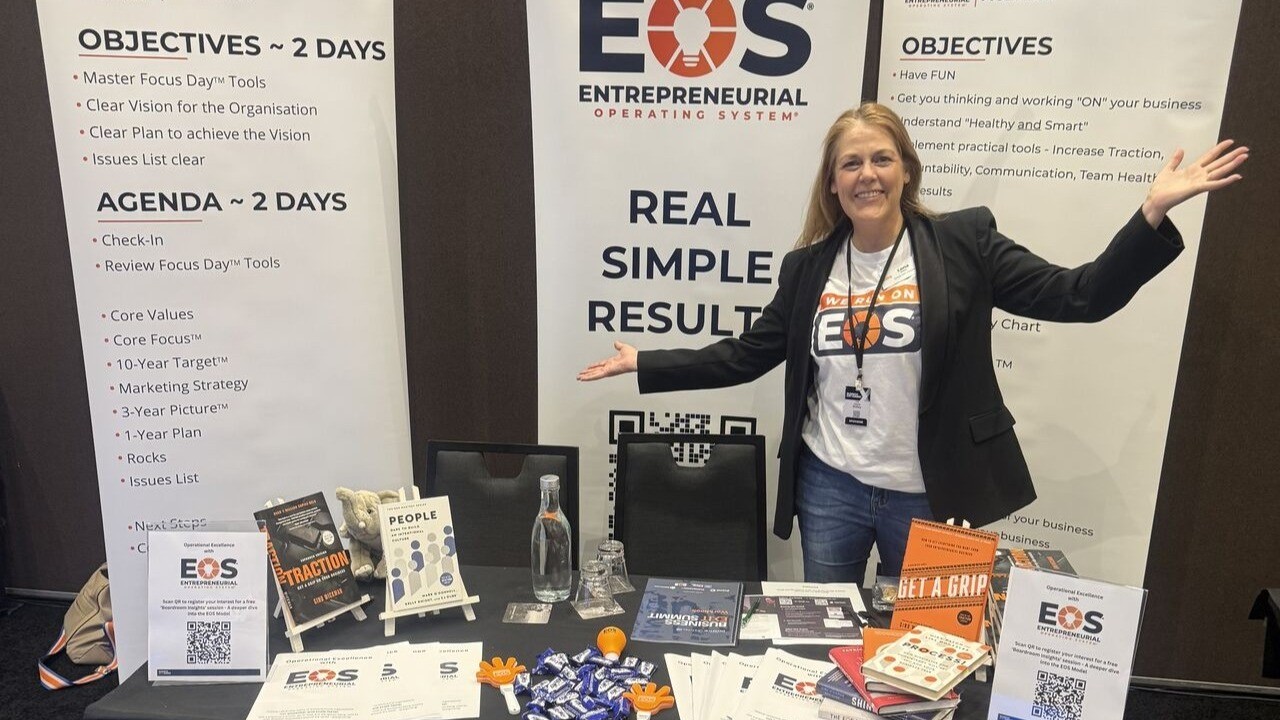
I recently facilitated an EOS Focus Day with the Engage leadership team who were ready to further elevate their leadership and team rhythm.
Within one day:
- Their Accountability Chart was redesigned for clarity
- Weekly Scorecard metrics were agreed on
- Ownership of each function was crystal clear
- The team left energised, aligned, and already executing with more purpose
If you’d like to explore more about EOS, we’d love to share what’s working and help you build the muscle of ownership and traction.
Reach out to Lena Ridley for a chat at [email protected]
Or explore more practical content on our blog at engagefinancial.com.au/blog