Acquisitions and the subsequent merger are often described in the language of romance with a courtship of due diligence, the proposal of a terms sheet, the vows inked into legal documents and the ensuing celebration. If you have ever been married, then you also know that the real work begins well after you have moved in together and reminisced about the honeymoon. Twelve months down the track, the initial excitement of a merger often gives way to the harder work of integration.
A Tale of Two Businesses.
This is the story of two businesses, let’s call them Agassi Advisory and Barty Wealth, who tied the knot in pursuit of growth and succession. A year later, they are learning to live together, sometimes awkwardly, sometimes beautifully.
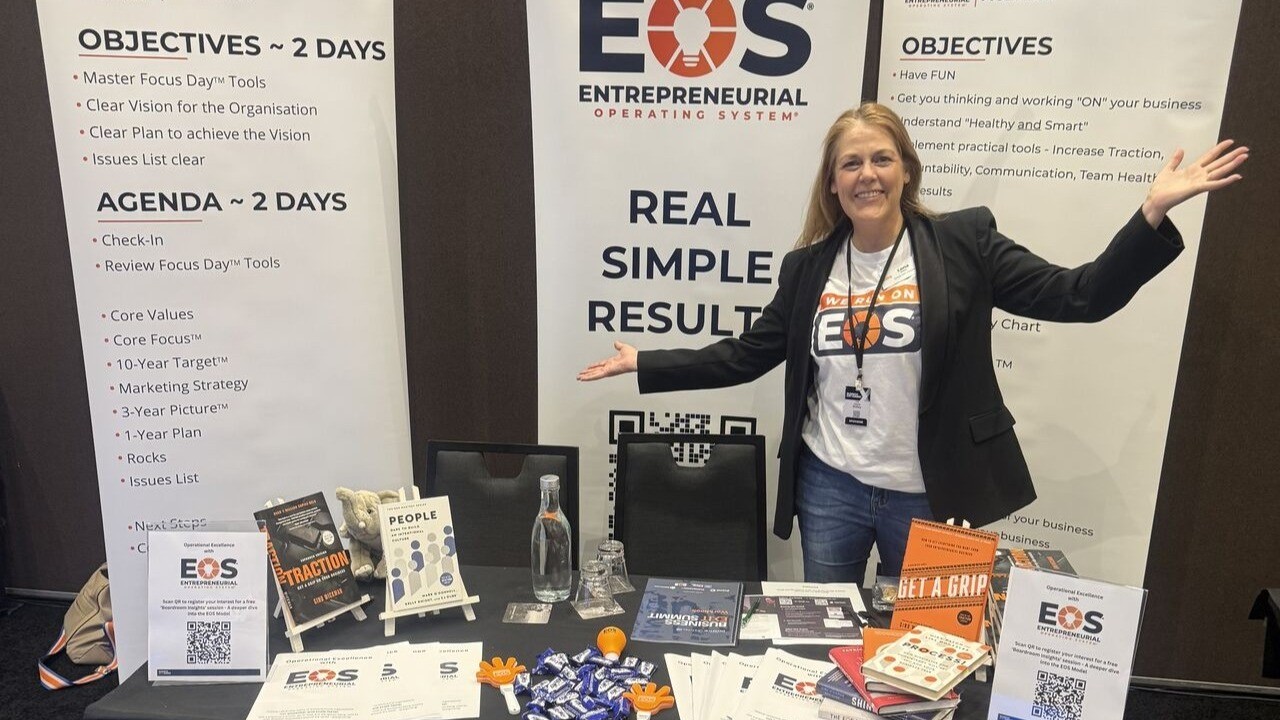
The Entrepreneurial Operating System (EOS) provides six key components to diagnose and strengthen any business. Through this lens, we can see how Agassi and Barty navigate the rocky middle ground of post-merger life.
Vision (Are We Still Seeing the Same Future?)
At the wedding, Agassi and Barty toasted to shared dreams of expanding their client base, leveraging complementary expertise, and building a stronger national presence. Twelve months later, cracks have formed. Agassi prides itself on a high-touch, boutique client experience. Barty has always valued scale and efficiency. Now, the merged leadership team wrestles with questions:
- Do we prioritise growth or client intimacy?
- Is our “ideal client” the mass affluent or high-net-worth niche?
- Did we really agree to brand under Agassi? Barty feels more like the future.
EOS reminds us that clarity of vision is non-negotiable. Without it, employees pull in different directions. For Agassi and Barty, the solution isn’t compromise but alignment. A clearly articulated Vision/Traction Organizer (V/TO) that defines who they are, where they’re going, and how they’ll get there. It’s like renewing vows, but this time with sharper eyes.
People and Who’s in the Right Seats?
One year in, the toughest conversations are not about goals or investment philosophies; they’re about people. Agassi’s founding partners still see themselves as “the bosses,” even though they’ll be stepping back from the day-to-day and retiring over time, while Barty’s leadership has been integrated unevenly. Some staff whisper about “us versus them.” Culture tensions emerge because the new core values have not been uncovered. If Agassi’s ‘leading with process’ grates against Barty’s ‘client meeting’ style, then staff who once felt like family now feel like pursuing the job ads.
EOS challenges businesses to ask three simple but powerful questions about every role:
- Does the person in the role get it (the new world)?
- Do they want it?
- Do they have the capacity (clarity, tools, training and time, among some) to do it?
These questions expose uncomfortable truths. Not every pre-merger person belongs in the new structure. Some employees thrive in the blended environment; others struggle. Real integration requires courage to move people into the right seats…or out of the business altogether.
Data and Duelling Scorecards
Agassi and Barty entered the merger with different ways of measuring success. Agassi tracked qualitative client satisfaction metrics, and Barty relied on financial KPIs. Twelve months on, the merged firm suffers from data fog. Management meetings descend into debates about whose numbers matter more.
In EOS, data is the great equaliser. A scorecard of five to fifteen numbers, reviewed weekly, cuts through emotion and politics. For Agassi and Barty, this means creating a unified reporting system that both cultures trust. Numbers don’t play favourites; they just tell the truth. Once the leadership team agrees on the scorecard, decisions become faster, accountability clearer, and arguments shorter.
Process and the “How” That’s Missing
When Agassi and Barty merged, they assumed they could simply blend their ways of working. Instead, they discovered that two sets of processes are worse than none. Staff are confused: which client onboarding checklist is valid? Which compliance process takes precedence?
EOS insists that process is the secret ingredient of scalability. It’s not about documenting every minor detail, but about identifying the handful of core processes that drive the business, such as client delivery, HR, finance, sales and standardising them. Once Agassi and Barty document and agree on “the way we now all do things here,” employees finally stop reinventing the wheel. The chaos calms.
Issues (The Elephant in the Boardroom)
A year after the merger, the list of unresolved issues is long: technology integrations, conflicting HR policies, duplicate client processes, and unclear roles. Everyone knows these problems exist, but meetings often skirt around them.
EOS treats issues not as nuisances but as opportunities to strengthen the business. The Issues Solving Track (Identify, Discuss, Solve) forces Agassi and Barty to name the elephant in the room, debate it honestly, and commit to action. For example, instead of endlessly debating whose client process is better, the team must decide, document, and move forward. The discipline of solving issues weekly prevents molehills from becoming mountains.
Traction
Perhaps the greatest post-merger challenge is turning big intentions into consistent execution. Early enthusiasm fades, and the leadership team finds itself slipping back into silos. Meetings lack discipline and clog up everyone’s diaries, priorities shift or get forgotten about with each new idea, and accountability is patchy.
This is where EOS shines. Traction is about focus and rhythm: setting 90-day priorities (Rocks), holding weekly Level 10 Meetings, and ensuring everyone knows the three to seven things they must achieve this quarter. For Agassi and Barty, this discipline creates momentum. Instead of spinning plates, the business builds traction slowly, steadily, and most importantly, together.

A Year (or Two) of Lessons
By the first anniversary of their merger, Agassi Advisory and Barty Wealth have discovered that combining businesses shouldn’t feel like fireworks but more like gardening. Success is not in the grand gesture of signing contracts but in the daily discipline of pruning, watering, and nurturing.
EOS provides a practical framework to survive the messy middle. Vision unifies direction. People clarify roles. Data creates objectivity. Issues force real conversations. Process stabilises. Traction ensures follow-through.
Agassi and Barty are still learning to live together after marriage. Some days are stormy, others serene. But as they embrace the six components, they begin to discover that the sum of the parts can, in fact, be greater than the whole.
If you’d like to explore more about EOS, we’d love to share what’s working and help you build the muscle of ownership and traction.
Reach out to Lena Ridley for a chat at [email protected]
Or explore more practical content on our blog at engagefinancial.com.au/blog